

Summary: Infrastructure means the equipment, assets and processes that allow our normal lives to go smoothly. That includes: the supply of drinking water; the taking away of waste water and sewage; energy supplies; transportation; and communication. These are all services that, at least in richer countries, we rely on daily to go about our work and leisure. Without them we would not only be greatly poorer, but whole types of economic activity would be all but impossible.
*
One way to think about infrastructure and the services it provides is to think of the plumbing in a reasonably modern house. In richer economies especially, we rather take for granted that clean water comes out of the tap, the toilet flushes smoothly and there are no leaks or puddles. On top of that we assume we have reliable wi-fi, the lights come on when want and our homes are warm (or cool) as desired. But we notice in particular if the plumbing goes wrong; one notable economic historian argues that the indoor flush toilet is one of the most valuable innovations in human history.
And, just like our (mostly reliable) home plumbing, we don’t think about infrastructure much, until it goes wrong. It is a great luxury of developed countries that we can, for the most part, take our infrastructure for granted.
Indeed, the history of infrastructure is in many ways the history of civilisation. If we take that to mean human history since the development of agriculture and settled towns and cities (there are those who see this as the downfall of human life compared with the previous hunter-gatherer era), infrastructure needs begin with water.
Agriculture needs water – not too much (flood control) and not too little (irrigation). Most of the infrastructure projects round the world till the industrial period involved large numbers of people doing back-breaking work to shift soil, sand or stone to build dams, pipes and channels, which allowed agricultural yields to be higher and more predictable, whatever the weather was. Often this labour wasn’t even paid for, but forced by kings, pharaohs, emperors or other leaders.
Energy needs for most of pre-industrial history came from humans themselves and animals, plus burning of various kinds of fuel (animal dung, wood, coal, whale oil). Later industrialisation depended on innovation in energy technology and then a huge increase in energy investment.
Transportation in ancient times was largely confined to relatively poor-quality roads (though the Romans improved on this, partly by mobilising private finance through an early form of companies). China pioneered long distance canals, long before they became a major feature of early industrial Europe and the US.
Communication in the pre-industrial era was limited to physical or oral messages delivered by a person, by ship, on horse-back or by road. There were some clever long distance techniques used mainly by the military, such as fire beacons, semaphore and heliographs (using mirrors and the sun) but for more general use, communication was very slow until telegraphy and the railroad appeared in the nineteenth century.
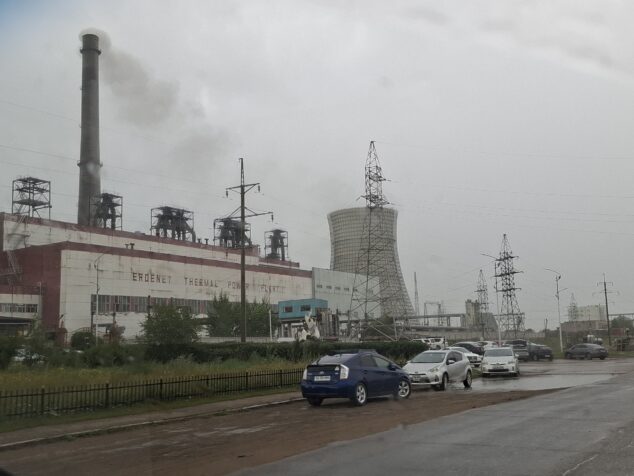
The real acceleration of infrastructure came with the combination of industrialisation and urbanisation that began in northwest Europe in the eighteenth century and spread to the rest of what we now called developed or advanced economies. That process was driven by technology such as steam engines, railways, electricity and telecommunications. The boom in canals and the development of urban water and sanitation involved fewer technical breakthroughs but took place on a far larger scale than before.
These infrastructure projects needed unprecedented amounts of resources, much of which were found through financial markets, the growth of which was stimulated by the very needs of infrastructure, especially the railroads. Modern capital markets evolved in large part because of the needs of the 19th century fast growing economies of Europe and the US. Those same markets supplied finance for infrastructure investments in Latin American, Asia and the Middle East and to a more limited extent, and usually for less benign reasons, in Africa.
Governments also played a major role, sometimes through directly sponsoring and managing projects, at other times in facilitating private investment. There are many cases of hybrid schemes that have given rise to today’s common form of infrastructure project, the public-private partnership (PPP).
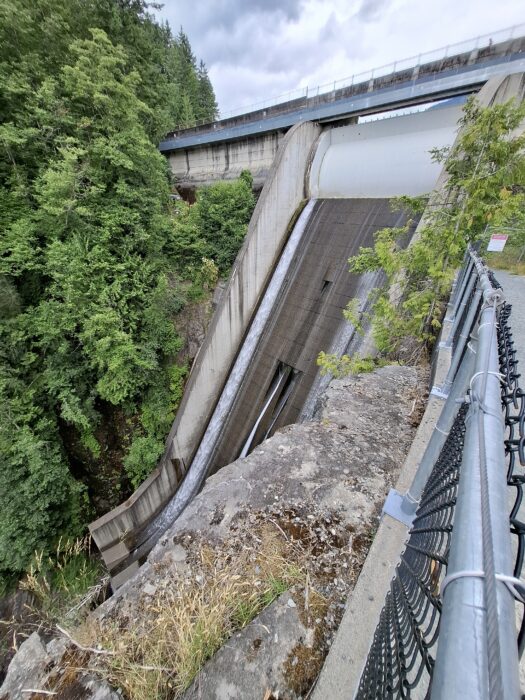
But there are large and looming problems with our infrastructure. In many richer countries, the physical assets that provide our various energy, transport and water services are ageing, failing and in some cases actually collapsing. This is because many governments, faced with competing demands for public spending, not least on age-related things such as pensions and health-care, have opted for the relatively easy route of cutting capital spending and maintenance on public infrastructure. These assets last for years, decades in fact, so that the effects of lower spending take years to show up. But when they do, in delayed trains, polluted rivers, collapsing bridges and dams, and power cuts (outages), the backlog of under-spending is often large and takes years to fix.
Why does infrastructure matter today?
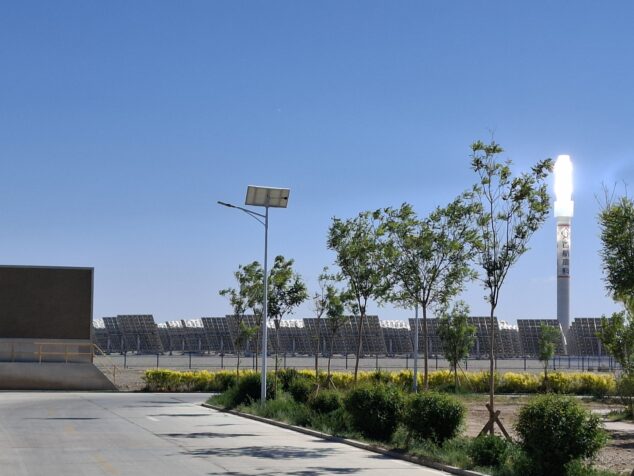
Meanwhile, developed countries face large costs for building new, low-carbon energy infrastructure, for climate change mitigation. Much of this will generate good financial and environmental returns eventually but it still needs to be paid for now.
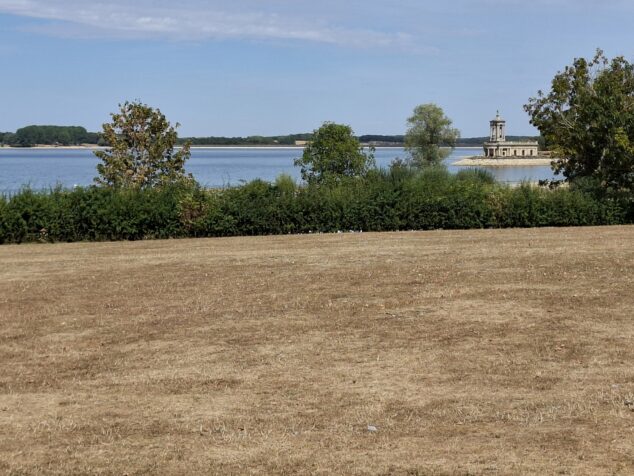
On top of that, owing to the failure to invest early enough to prevent substantial climate change, we need to spend another chunk of money on climate adaptation, much of which will be on making buildings liveable in a hotter climate. But it also includes flood protection and limiting (it cannot entirely prevent) coastal damage from rising sea levels and fiercer storms. These investments, though necessary to protect our way of living, don’t generate any additional financial return, since they merely limit the damage from climate change.
If we turn to lower income, or developing countries, many face a different problem, which is that they lack the scale and quality of the infrastructure that rich economy citizens take for granted. Poor nations often have very low levels of reliable electricity supply, without which much of the rest of the infrastructure won’t work.
The largest and fastest growing cities are increasingly in developing countries. Urbanisation can be a source of economic dynamism, as it brings people together in a way that can benefit both the demand and supply of labour, boosting economic growth. But this only works if the city has reasonably efficient transport. And large slums without water or sewage facilities are unhealthy. These problems are familiar from the urbanisation of Europe and the US, and more recently China, all of which have built the urban infrastructure that makes both the economies and the lives of their citizens safer, more efficient and more convenient. But many developing country cities lack much of this infrastructure.
In short, infrastructure is essential for economic development and human flourishing; in (most) rich countries we need to upgrade and extend a large but faltering system; and in developing countries we need to build a great deal of brand-new infrastructure.
This investment implies a great deal of capital spending, meaning investing in (mostly) physical assets such as electricity generation and distribution, roads and railways, water and sewage pipes and fibre optic cables and data centres. The point of a capital asset is to provide services for years, even generations into the future. A good capital asset is therefore a very good investment.
How do we pay for all of this?
But the resources to build these assets must come from somewhere. Simply put, we can either reduce our spending on other things, meaning lower consumption; or we can borrow the resources from somebody else – provided we can find someone to lend to us. Globally there is obviously a finite supply of resources, so we can’t all borrow our way to painless investment. Richer countries are much more able to tap financial markets for some of their spending, whereas developing countries often face either limited access or a punishingly high cost of finance.
But even in richer countries, many of these investments need government involvement, whether through permission, regulation, or actual ownership and management. And governments, as we have seen, already face rising pressure on their resources.
The good news is that although global infrastructure investment needs are in the trillions of dollars (estimates vary, but agree on this) a trillion is not quite the barrier it used to be. The global financial markets are quite up to mobilising these sorts of amounts and already are doing a lot of it, especially in renewable energy. But global markets tend to be reluctant to lend to lower income countries, for understandable reasons, where governments and other non-private financial institutions will have to be part of the solution.
Conclusion: a big challenge but we can do this
In summary, there is a large need globally for new infrastructure investment. But there is also a large global financial system that, on the right terms, is ready to finance many of these investments. The challenge is to connect the demand and supply of funds and make it work efficiently, especially in lower income countries.
The process has started, mainly in renewable energy investment, which annually now far exceeds investment in fossil-fuel energy. But there is a great deal more to be done, which requires changes in government policy, innovation in the financial system and acceptance by citizens that this must all be paid for. The good news is that history offers many examples of different ways to mobilise resources for infrastructure, using the state, private finance and combinations of the two. But we need to learn from history if we are to rise to the infrastructure challenge.
Leave a Reply